Category: Politics

Democracy Is More Than A Ballot Every Two Years

….and do other stuff, too.

There is a common sense about democracy in the United States.

We elect people to government. By and large, we allow them to do their work. If we like their work, we re-elect them. If we do not like their work, we sometimes get angry, but that anger is mostly confined to the ballot box every two to four years. The power and agency afforded to one in this system is largely based on class: the wealthy are sought out for consult and decision-making, while the working class is almost entirely shut out of such channels of power completely.

This common sense complicates the everlasting tensions between the Left and the electoral process.

On one hand, the crafting of this two-party system is not natural, and is the product of a long line of decisions taken by the privileged and powerful to limit the acceptable realm of solutions to the problems plaguing our society. Barriers such as onerous signature requirements and the lack of alternative electoral options — such as fusion voting or proportional representation — means the choice that one is presented with on their November ballot often constitutes shades of the same. As such, socialists are right in denouncing the American political process as a kind of sham: democracy for the bosses and authoritarianism for the worker.

Yet national mythologies and common senses are rarely formed without at least some acquiescence from the working class, and it is no different with the electoral process. The truth of the matter is that, for now, the ballot box is the way that a plurality of the working class marks their political preferences. Because of this, socialists cannot afford to completely dismiss the electoral process, lest we be out-of-touch with the class that we seek to elevate, liberate, and emancipate.

So then, what is to be done?

Theft As Redistribution In A Time of Crisis

(Editors’ Note: It is our profound pleasure to announce that Roqayah Chamseddine has decided to join The South Lawn as a co-editor and writer to Douglas and Bryan. There’s other big changes in the offing so keep your eyes peeled!)

In parts of Texas, floods have overwhelmed entire streets to the point that houses are seemingly bobbing in gushing streams. An estimated 450,000 people, at the very least, will be needing some form of disaster assistance after Harvey made landfall —touching down twice near the Texas-Louisiana border. The destruction of dozens of small cities has been catastrophic, with the governor of Texas estimating the costs to be somewhere around $180 billion. Homeowners are also scrambling to find a way to deal with rebuilding their lives, and coming to terms with the agonising reality that their policies likely won’t cover damages. In addition, an overlooked result of Harvey has been a climbing death toll, which currently stands at 45. The hurricane has unleashed hell on countless families, and yet focus has once again shifted to the media’s most prized and sensationalist concern: looting.

In the midst of what can best be described as a small apocalypse, ABC News anchor Tom Llamas reported looters to the police and then notified Twitter—because there can be no frenzied public reproach without the spectacle. The response to Llamas was quick and tempestuous, but unyielding execration from a few good people isn’t nearly enough to rid the world of this pitiless attitude of those who so intensely hate the poor. Too many people are quick to froth at the mouth at the very thought of someone stealing; a loaf of bread, a half-empty till, a television screen. As 50 inches of rainwater drowned out streets and highways people still managed to feign concern for grocery stores that would soon be littered with rotted products.

Poverty is a sentence, and much of society would rather the poor serve out their terms with little noise—do not beg, do not take, and do not entertain the idea of making demands for more than whatever pittance the State will offer you. It’s no wonder then that even with a torrential hell playing out in the background that people are aroused by the images of armed men guarding convenience stores from looters. The racialized caricature of the modern-day thief, pictured carrying a television screen, and sneakers, stealing from little ol’ Mom n’ Pop, is an ever-present image. It’s a picture of chaos; of shattered glass, and fire; of a hyper-militarized police response that drowns out streets with pepper spray. Hell for the upper class isn’t a world in which the poor are forced into living under bridges, but one in which the poor take, and demand more than charity with as much zeal and intensity as the rich steal from the working class. Hell isn’t the water rising, but the doors of a convenience store being forced open, and people running out with arms full of food.

The Revolution Will Not Be Voted On

This piece is going to break a rule that I set out for this blog about two years ago, which is that none of the pieces here will be based on things that happen on social media.

That rule is there for numerous reasons, with the biggest one being that producing content that is Terminally Online can distort the real-world reach of certain people, events, and statements. Because the world of social media can be all-encompassing, it is easy to forget that the person with the terrible opinions that you hate is probably unknown to well over 90 percent of your neighbors.

But for Markos Moulitsas and Joy-Ann Reid, I am willing to make an exception.

Another Harvest In An Orchard Of Strange Fruit

It was a cold night in the fall of 2002 when me and my then-girlfriend pulled up to the public parking lot at Lake Calhoun in Minneapolis to relax and snuggle a bit. I was 17, a country kid from southeastern Virginia who had just moved to the area with my father the previous summer to start college.

Doing this in the front of my car was not a particularly comfortable experience, so we decided to hop in the back seat. I had to clean it out first, of course, so I did just that before we settled in to watch the moonlight glistening off the lake. It was to be, it appeared, one of those nights that sticks with you long after the moment has passed. Not because anything dramatic happened, but because we tend to remember those little instances in our coming of age where things might have been a bit simpler and sweeter, particularly as the grind of adulthood makes such moments difficult to come by.

And, without question, that night has remained stuck in my mind. I wish that I could tell you that the memory was positive; it might have been, were it not for the Minneapolis Police Department.

I saw the police car entering the parking lot just a minute or two after we had settled in. I tensed up a bit — my parents gave me The Talk just like any other — but I figured they would just pass us by and leave us be. That changed when the cop in the driver’s seat flashed the spotlight into my car. I am thinking, “Oh God, I hope they don’t think I’m trying to fuck out here.” Figured that I would just explain to them how my parents would not particularly approve of such behavior and hope that they would just let us alone.

“Is this cup yours?,” asked the officer with the blinding spotlight.

In my rush to clean the car, snuggle for a bit, and then get home before it got too late out, I had forgotten to pick up a Wendy’s cup that I had dropped due to my hands being full of trash from the back seat. I stated that it was mine, apologized profusely, and went to throw it away. I figured that would be enough. But while one of the cops looked over my driver’s license, his partner kept getting more and more agitated.

“Oh, so you think that you can just throw your shit all over the place whenever you feel like it, huh? You think we’re gonna just pick it up like mommy and daddy do at home?”

You can probably imagine that I do not particularly care for people who speak of my parents this way. But having grown up with the highlight reels of Your Friendly Neighborhood Law Enforcement Officer At Work  — Rodney King, Amadou Diallo, Sean Bell — I knew that getting angry would result in a situation even more unpleasant than the one I was currently facing. So I simply stood my ground and said that he did not need to take it there and asked for their last names.

“Who do you think you’re talking to, you spoiled bitch?!”

At this point, the officer checking my driver’s license has to, basically, hold his partner back and tell him to calm down. My driving record was obviously spotless, and the officer handed back my license after a few minutes. With an admonition to “pick up your trash next time,” the two Minneapolis cops drove away in their patrol car. I never got their names. I never got their badge numbers.

When that cop stood there on a cold Minneapolis night and disrespected me so forcefully, every bit of anger and bile inside of me exploded. I yelled. I pounded the roof of my car. I spit. I cried. I punched my steering wheel.

And then I did something stupid: I got in my car, turned it on, and said that I was going to go after those cops. My girlfriend begged me not to do so, but I was not listening to anything she had to say. She was quick to pick up on this, and threw herself across my lap in order to prevent me from driving anywhere. I did not chase after those cops, which is probably why I am here to tell you this story in the first place.

I felt powerless then. And on July 6, 2016, that feeling of powerlessness came flooding back to me as news of a police shooting in St. Paul, Minnesota came flooding through Facebook in graphic detail.

They Have Learned Nothing And Forgotten Nothing.

Look, I should be upfront about this: I am not a Democrat — though I was at one point — nor do I think that the Democratic Party is an entity that will ever have the working class’s interest at heart. In a way, the party’s flailing campaign of red-baiting and blame-shifting onto pointless crap that few people give a damn about works as a benefit to socialists who are working to build a politics of equality and liberation. Additionally, I really hate writing response pieces; I would much rather be thinking of ideas that can be put to use as we move forward.

But after reading Susan Bordo’s article in the Guardian — titled “The destruction of Hillary Clinton: sexism, Sanders and the millennial feminists” — I simply could not help myself on this.

The Debut of Roqin’ With The South Lawn!

We are proud to announce the debut of our new political podcast, Roqin’ With The South Lawn. It’s hosted by us and friend of the blog Roqayah Chamseddine, and it’s produced by another friend of the blog Drew Franklin. It’s a twice monthly podcast that will do interviews and discussion about topics relevant to organizing and political mobilization for the Left, mostly from a view that is skeptical of electoral politics. This episode, we discuss antifascist direct action and general strikes.

The next episode, we are bringing Robert Greene on to discuss the history of socialism in the US. The RSS feed can be found here, and we are working on getting the show into the iTunes Music Store and Google Play Music.

Escapism as Politics: American Liberals and Cultural Consumerism

(This is a joint post by Douglas and Cato)

If there is one thing that you can say about the Bush Administration with absolute certainty, it was absolutely catastrophic for American liberalism.

It began with the closest presidential election in the history of the United States, with George W. Bush “winning” Florida’s crucial electoral votes by just 537 votes. In the face of such a questionable election, liberals decided to direct their ire towards Ralph Nader for having the temerity to participate in a free and democratic election, stating that the 97,000 votes that he received in the state were to blame for handing the Republicans the presidency; more so, apparently, than the 200,000-plus Democrats who voted for Bush in Florida.

The terrorist attacks on September 11th and the resulting wars in Iraq and Afghanistan combined with an increasingly reactionary domestic policy, capped off by aggressively gigantic tax cuts for the wealthy and a Medicare drug plan that was a massive giveaway to drug companies, to put liberals into a defensive crouch. An unprecedented midterm loss in 2002, driven largely by nationalist sentiment stirred up in the wake of 9/11, was compounded by another questionable loss to Bush in 2004. While liberals were able to head off some catastrophes, like defeating Bush’s effort to privatize Social Security immediately after he won re-election, the story of his administration is largely one of traumatizing defeat for liberals in a way that had not happened in modern American politics.

In the face of this kind of demoralizing defeat, liberals sought a surcease to their feelings of loss in media and culture. Two programs, in particular, stick out as enduring symbols of that era of retreat.

American Liberalism is Dead.

(This is a joint post by Douglas and Cato)

American liberalism died at 8:41pm EST on November 8, 2006.

It was at that time that the Associated Press called the U.S. Senate race in Virginia for Democratic nominee Jim Webb, giving the Democrats their 51st seat in Congress’s upper chamber and unified legislative control for the first time since 1992. This might seem a confusing time for liberalism to be dying, but it comes into focus a bit once you get below the partisan numbers. We will discuss this a little more later, but it makes sense to first discuss the long illness to which independent liberal politics in the United States eventually succumbed.

It was a slow death, one that began not long after the 1984 presidential election. Despite the electoral humiliation at the national level dealt to party nominee Walter Mondale, all was not lost for the Democratic Party. After all, they scored some victories in gubernatorial races, they still controlled the House of Representatives, and a 36-year old Congressman from Tennessee named Al Gore ascended to United States Senate. But for liberals within the party, the gig was up.

So You Think You Can Take Over the Democratic Party?

The Democratic presidential primary has finally come to an end, with the longtime frontrunner Hillary Clinton clinching the nomination. Bernie Sanders has now come out and said that he will work with Hillary Clinton to defeat Donald Trump. It may have killed hopes that some leftists may have had that Sanders might still run as an independent or with Jill Stein on the Green Party ticket, but his endorsement of Hillary Clinton is far from unexpected.

With the nominating process now behind us, the question for supporters of Bernie Sanders both unwavering and critical is simple: What is to be done now?

One of the solutions that will eventually be bandied about is entryism, which is the practice of having people join a party en masse in order to engineer a takeover of the political party in question. The most famous modern example of entryism occurred within the Labour Party in the United Kingdom in the late 1970s through the mid-1980s. There, members of a Trotskyist organization known as Militant attempted to steer Labour to the left by signing up to join the party and winning control over the organization piece by piece. They succeeded in having a Militant member named as the National Youth Organizer after taking over the Labour youth organization, meaning that the organization had one person on the National Executive Committee (NEC). Attempts by more moderate Labourites to expel Militant were initially unsuccessful, but after the Militant-dominated Liverpool City Council decided to run a deficit in contravention of national law, Labour eventually succeeded in expelling the organization from the party. They even went to the extent of deselecting Militant’s two MPs (more on this later).

Left-liberals and social democrats in the United States might push forward by saying that working within the Democratic Party is the best way to ensure that the concerns of the working class get heard, and that we should use the enthusiasm generated by the Sanders campaign to bring people into the party with the hopes of changing it. Let’s engage with this idea and analyze just what it would take to have this happen.

Burying You With a Good Shovel in the Good Earth: Liberals and Trumpism

(This is a joint post by Douglas and Cato)

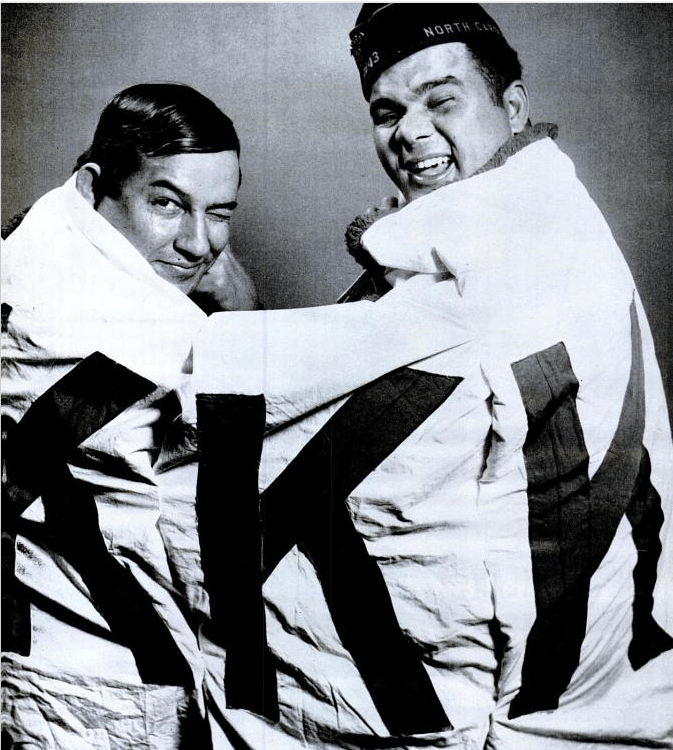
Once upon a time, a small group of indigenous people took on the Klan and won in the rural South in 1958.

lumbee-in-kkk-banner

The Lumbee tribe is not a big or especially well-known tribe outside of North Carolina. Its members make up the overwhelming majority of the population of Pembroke, NC and they constitute 40% of the population of Robeson County, which is on the North Carolina-South Carolina border. The Lumbee are denied access to the funds set aside for most federally recognized tribes despite gaining federal recognition in 1956. This is part of why Robeson is not a rich county: 1 in 3 residents live in poverty as of 2012, with 8% unemployment as of 2015.

Aside from poverty, there was another thing making life hard for the people of Robeson County in 1958. It was a Klan Grand Wizard obsessed with preventing miscegenation. His name was James ‘Catfish’ Cole, and he had come up from South Carolina to teach the Lumbee a lesson about not intermarrying with white people. He deployed two tools from the usual array of Klan terror: night rides and cross burnings. Cole was planning on holding a rally and cross burning near the town of Maxton by a place called Hayes Pond.

It did not go as he wanted it to. When approximately 50-150 Klansmen were all set to rally, 500 Lumbee, armed with rocks and sticks and firearms swarmed them. Four Klansmen were wounded by gunfire, the rest (including Cole) ran for the woods, leaving behind their families. The sheriff ultimately showed up and dispersed the ‘Klan rout’ after the Lumbee tribe took the Klan’s banner as a trophy, which is pictured above with the leaders of the Lumbee group who confronted the Klan, Charlie Warriax and Simeon Oxendine. Cole was ultimately arrested and prosecuted for inciting a riot, and the Lumbee still celebrate the anniversary of the Battle of Hayes Pond to this day.

So. What does that have to do with Trump?